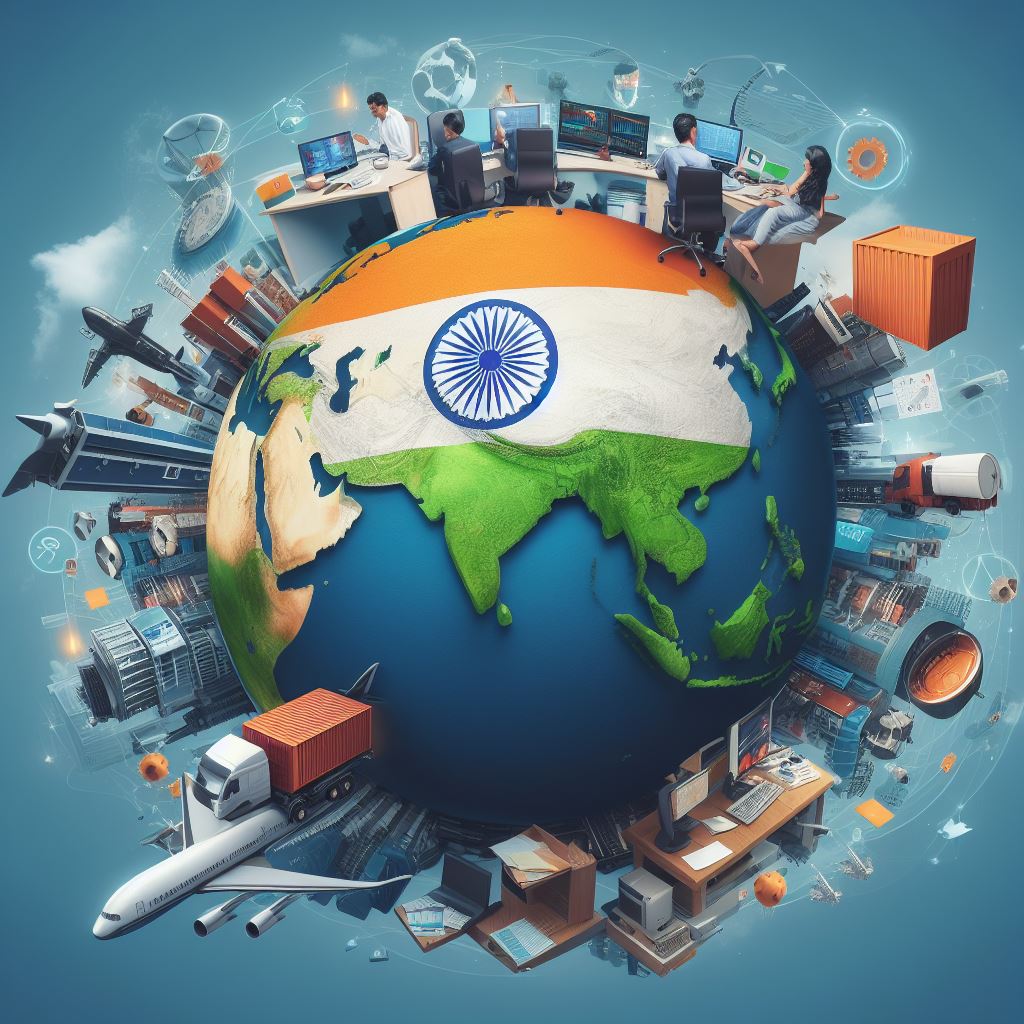
The changing landscape of international trade and protectionism has become a topic of great significance in recent years. The rise of protectionism, characterized by trade barriers aimed at shielding domestic industries from foreign competition, has challenged the principles of free trade that have long been the foundation of global commerce. In this article, we will explore the changing dynamics of international trade and protectionism, with a specific focus on India’s position and recent developments in computer hardware imports.
India has a complex history with regard to protectionism, experiencing periods of both openness and closure to international trade. In the 1990s and 2000s, the country embarked on a path of liberalization, significantly reducing its average tariff from over 80% in 1990 to approximately 13% in 2008[1]. However, since Prime Minister Narendra Modi came to power in 2014 and launched the “Make in India” campaign, tariffs have begun to rise again, with the current average tariff standing at around 18%[1]. This shift towards protectionism is driven by the government’s belief that reducing imports is essential for national security, job creation in the manufacturing sector, and reducing dependence on China.
One industry that has been significantly impacted by India’s protectionist measures is the computer hardware sector. The government has implemented various measures aimed at promoting domestic manufacturing, such as imposing import duties on certain computer components and providing incentives for local production[1]. While these measures are intended to bolster the domestic industry, they have faced criticism for hindering industry growth and increasing costs for consumers.
Protectionism can have both positive and negative effects on the domestic economy. On the positive side, it can create a less competitive market for domestic firms, leading to higher profits and increased investment[3]. However, on the negative side, it can also result in higher prices for consumers, reduced product quality, and a lack of innovation[3]. In the case of India’s computer hardware industry, it remains to be seen whether the benefits of protectionism will outweigh the costs.
As the global economy becomes increasingly interconnected, it is crucial for countries to strike a balance between protecting domestic industries and promoting international trade. India, with its ambitious national development goals, needs to align its trade strategy with its long-term objectives[6]. This requires a careful evaluation of the costs and benefits of protectionism and a willingness to embrace open trade when it is in the country’s best interest. By doing so, India can position itself as a leader in the changing landscape of international trade and contribute to global economic growth.
In conclusion, the changing landscape of international trade and protectionism has significant implications for countries around the world. India, with its history of both openness and closure to international trade, has recently shifted towards protectionism, particularly in the computer hardware sector. While this approach aims to support domestic industries, it also raises concerns about increased costs for consumers and limited innovation. Going forward, India must strike a balance between protecting domestic industries and promoting international trade to achieve its long-term development goals while contributing to global economic growth.
Citations
1. The Economist. (2023, August 17). India must abandon protectionism. Retrieved from https://www.economist.com/leaders/2023/08/17/india-must-abandon-protectionism
2. Cato Institute. (n.d.). India’s New Protectionism Threatens Gains from Economic Reform. Retrieved from https://www.cato.org/policy-analysis/indias-new-protectionism-threatens-gains-economic-reform
3. Atlantis Press. (n.d.). The Impacts of Trade Protectionism on the Indian Economy. Retrieved from https://www.atlantis-press.com/article/125966047.pdf
4. Stratfor. (n.d.). The Implications of India’s Pursuit of Protectionist Trade Policies. Retrieved from https://worldview.stratfor.com/article/implications-indias-pursuit-protectionist-trade-policies
5. The 1991 Project. (n.d.). From Protectionism to Global Integration: India’s Trade Policy Before and After 1991. Retrieved from https://the1991project.com/essays/protectionism-global-integration-indias-trade-policy-and-after-1991
6. East Asia Forum. (2023, February 6). Getting India’s trade strategy aligned with its national development ambitions. Retrieved from https://www.eastasiaforum.org/2023/02/06/getting-indias-trade-strategy-aligned-with-its-national-development-ambitions/
 "Connecting communities, empowering nations: Unifying the Regional and Global Economy ."
Leave a comment